

Knife Handle Materials
Not long ago most knives had either wooden or bone or antler handles. These days the options have exploded and each material brings its own look and personality.
Wooden Handles
Most hardwoods and some stabilised softwoods make excellent handle material. The wood needs to be hard enough to hold shape, but be wary of woods that are extremely hard because they can crack. Stabilising softwoods involves putting the timber in a vacuum chamber with a resin. The vacuum pulls the air out and the resin fills the voids so the wood becomes stronger and more stable.
Wood is rewarding to finish. A good oil brings the grain to life and no two pieces ever look the same. In New Zealand we’re spoilt with native timbers. My favourites are Black Maire, Rata and Totara. For exotics I lean toward Teak, Ebony and Curly Birch.
Wood Infused
This is similar to stabilising but uses coloured resins. It takes the natural grain and adds more depth and contrast. Curly Birch infuses especially well. I often pair infused Birch with teak and brass for chef knives.
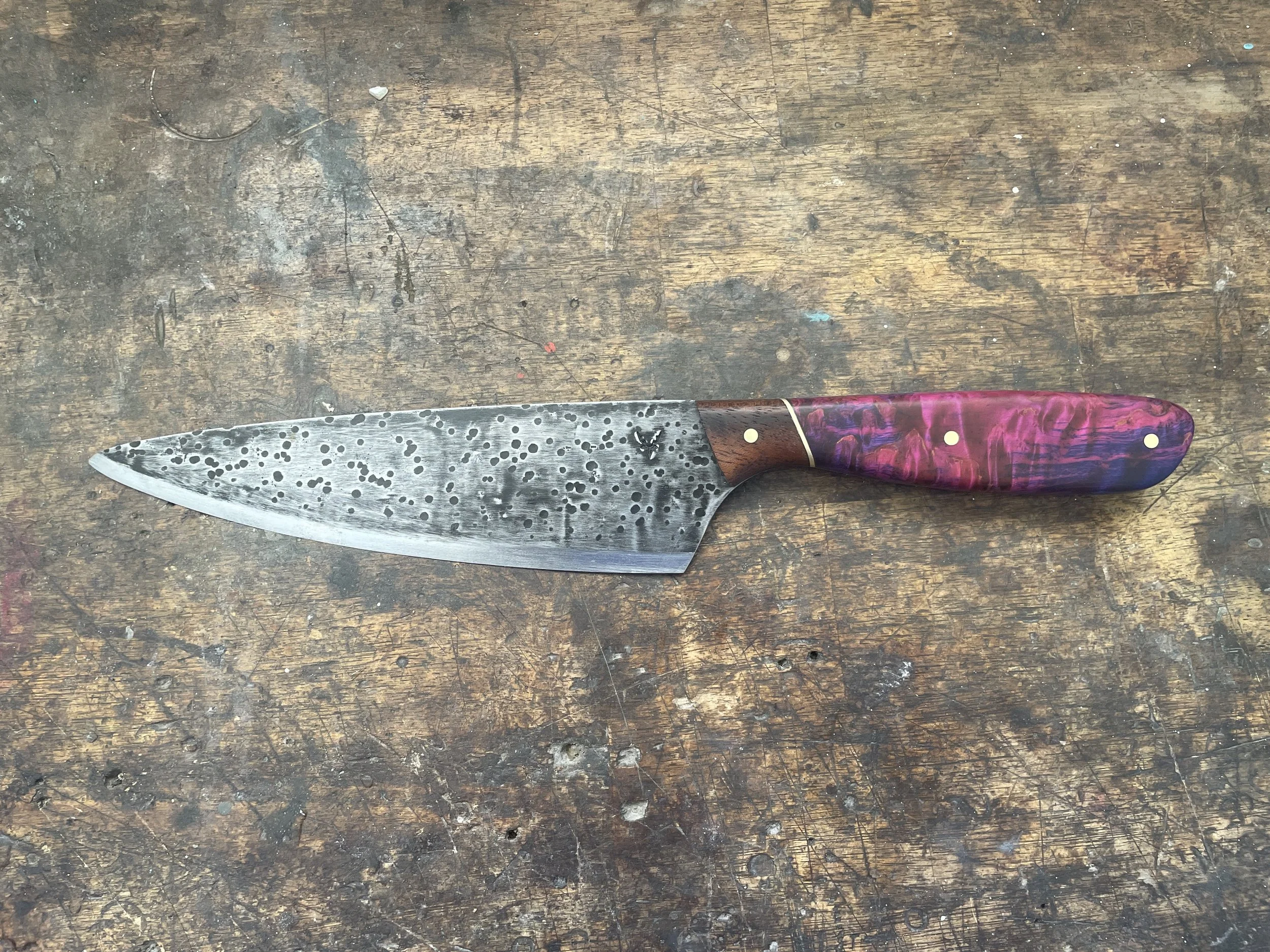
Curly Birch wood infused with pink and purple resin
Antler, Bone and Horn
A classic, traditional choice. The challenge is finding the right piece and shaping it so it actually fits the hand. There are plenty of odd-looking antler handles online. They might look impressive but usability comes first.
There are many bone and buffalo horn options out there. Some people say buffalo horn can be unstable. I can’t confirm that, but the one batch I worked with was difficult because drilling pin holes was unusually hard. Bone-wise, the only type I’ve used recently was Woolly Mammoth tusk. It arrived pre-cut into scales which made it easy to work. You wouldn’t know you were sanding something thousands of years old.
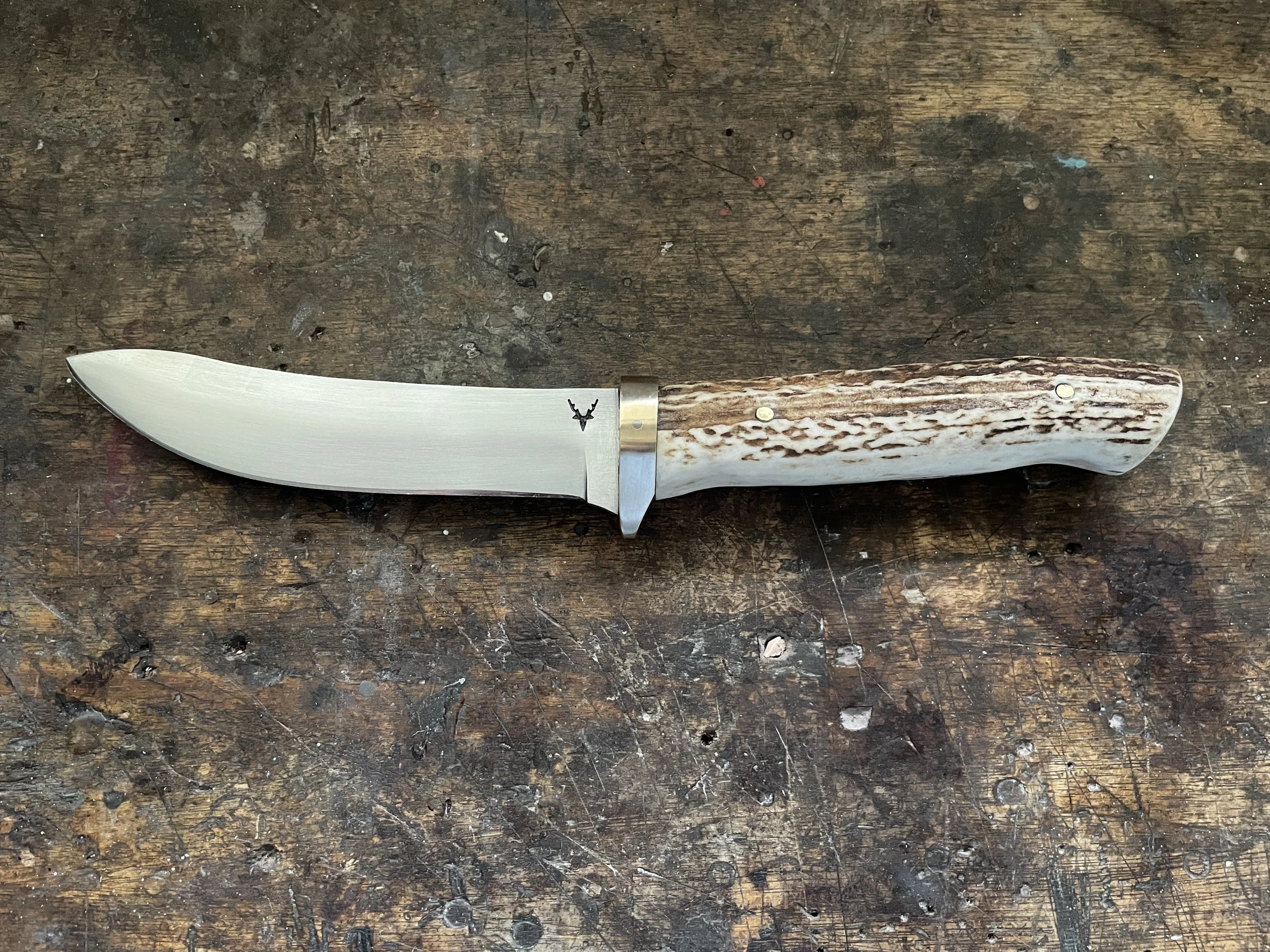
Deer antler
Synthetic Handles
Synthetics are great when you want something different to natural materials. There are endless choices. Common ones include G10 (fibreglass laminate), micarta and acrylic. Acrylic is my least favourite because it shows every scratch. Micarta is my top pick because it has excellent grip and can be laser engraved. G10 works well for scales or spacers, but it cannot be laser engraved.
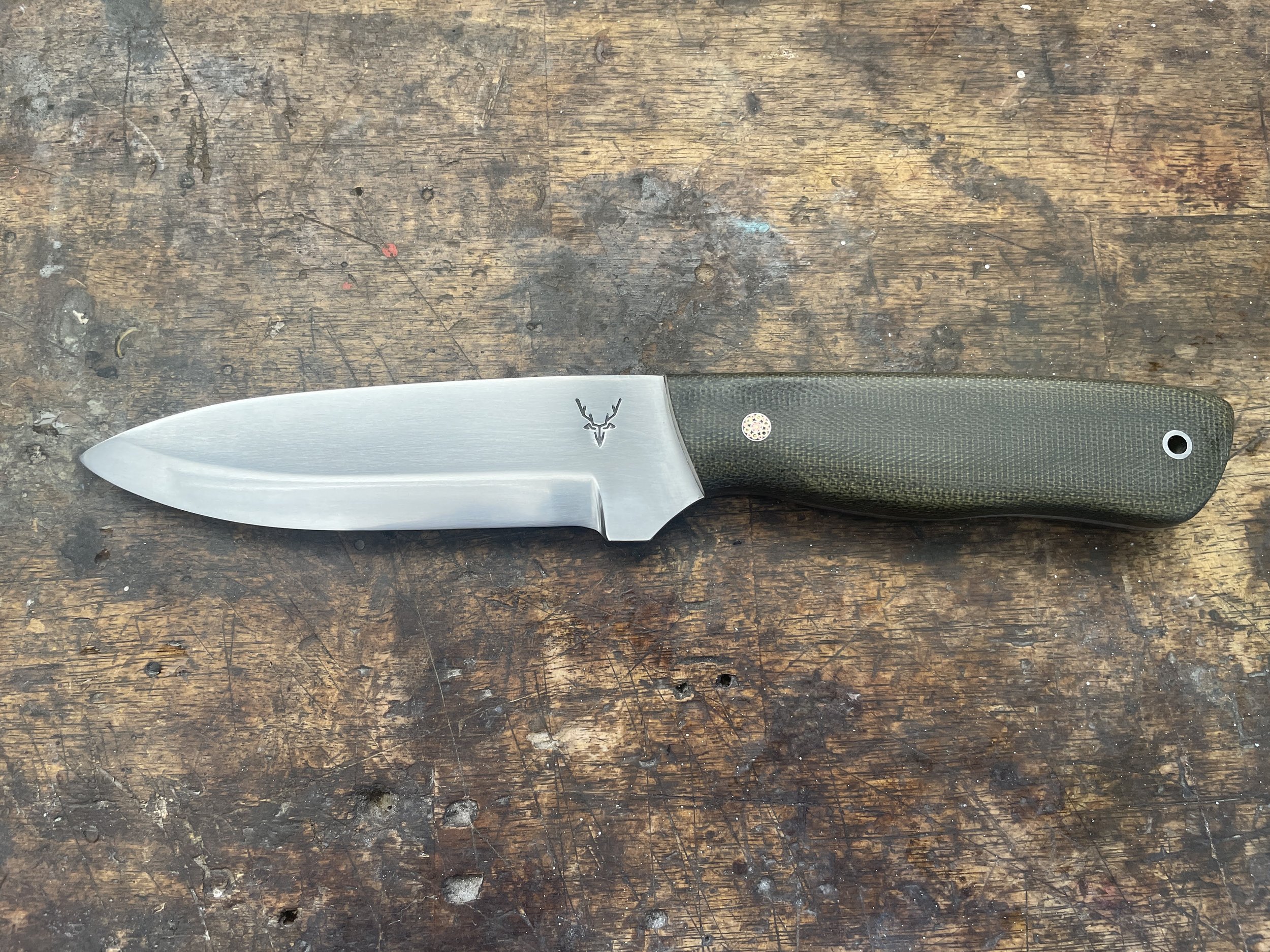
Green canvas micarta
Stone
Some makers produce stunning stone-handled knives, but stone is extremely hard and slow to work. It can also crack if it gets too hot. I’ve worked with small strips of Pounamu (New Zealand greenstone) and even that was a real challenge.

Pounamu inlay in rata
Summary
Nearly anything can be turned into a knife handle if you’re patient enough. Pick a material you like, work with its strengths and make it your own.
Behind the Knife
If you're interested in the business behind the workshop, I'm documenting that journey over at The Maker's Journey.
