

The Best way to Store and Transport Kitchen Knives
A good kitchen knife is an investment. Tossing them loose in a drawer or travel bag is one of the fastest ways to damage the blade. Here’s how to do it properly.
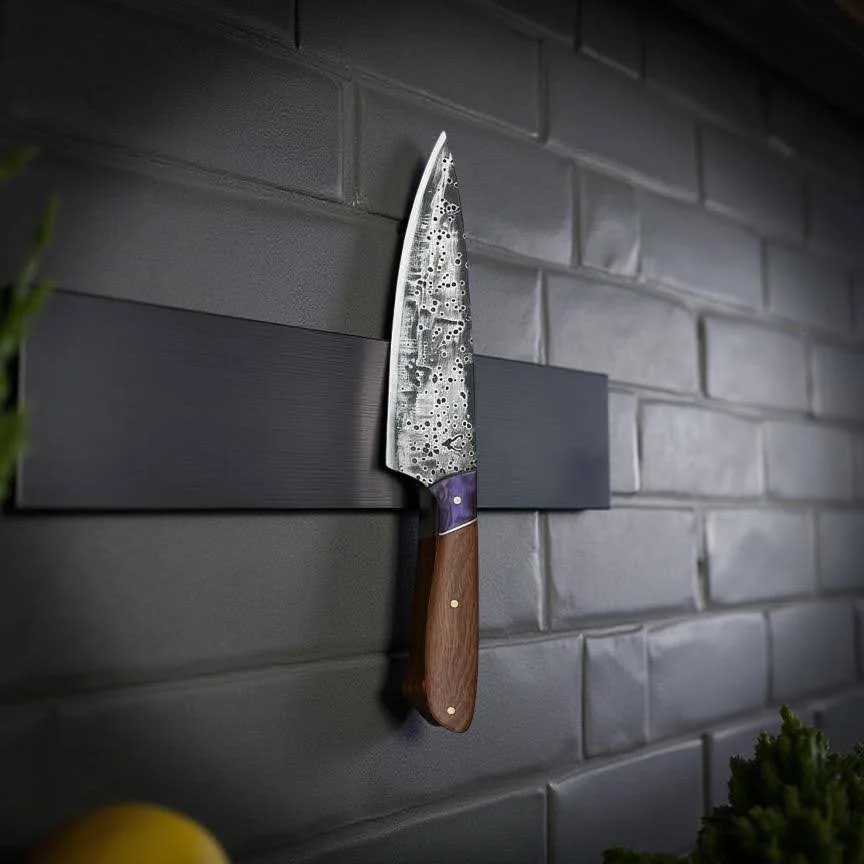
Knife on a magnetic strip
Why Proper Storage Matters
Knife edges are incredibly thin. When they rub against other metal objects, countertops, or even each other, the edge rolls or chips. Moisture trapped against the blade can also cause corrosion, even on stainless steel. Good storage solves two main problems:
It protects the cutting edge
It keeps knives dry and ventilated
Best Options for Storing at Home
1. Wooden Knife Block
A quality wooden block keeps blades separated and protected.
Pros: Easy access, good protection, attractive on the counter.
Cons: Can trap moisture if knives are stored wet; takes bench space.
Tip: Always dry knives before inserting.
2. Magnetic Knife Strip
A wall-mounted magnetic strip holds knives securely and keeps edges free from contact.
Pros: No edge contact, hygienic, saves space.
Cons: Requires careful placement to avoid chipping when attaching/removing.
Tip: Touch the spine to the magnet first, then roll the blade down gently.
3. Drawer Insert or Edge Guards
In-drawer trays or individual blade guards protect knives while keeping counters clear.
Pros: Safe, hidden storage, good for small kitchens.
Cons: Slightly slower access.
Edge guards are also excellent if you only own a few knives.
How to Transport Kitchen Knives Safely
Whether you’re a chef traveling to work, heading to a cooking class, or taking knives to be sharpened, transport matters.
1. Knife Roll Bags
Professional chefs use fabric (e.g. canvas) or leather knife rolls with individual slots.
Pros: Portable, organized, lightweight.
Cons: Less rigid protection against heavy impacts.
2. Hard Knife Cases
Rigid cases with foam inserts provide maximum protection.
Pros: Excellent for travel and shipping.
Cons: Bulkier than a roll.
3. Blade Guards + Zip Pouch
For casual transport, a fitted blade guard over each knife inside a padded pouch works well.
Pros: Simple and affordable.
Cons: Less structure than a case.
Extra Care Tips
Always clean and fully dry knives before storage.
Never store knives loose in a drawer.
Avoid leaving knives in sinks where they can be knocked or sit in water.
Never put them in a dishwasher
If transporting, ensure blades cannot move freely inside the bag or case.
A sharp knife is safer, more enjoyable to use, and lasts longer — but only if it’s cared for properly. Treat your knives well, and they’ll return the favor every time you cook.
Behind the Knife
If you're interested in the business behind the workshop, I'm documenting that journey over at The Maker's Journey.
